
Glasses & uv lights
With a UV lamp you trace refrigerant leaks in an air conditioning system. You add UV dye to the system, let it circulate and shine the lamp along pipes and connections. The leak lights up. Without UV glasses you look straight into the UV light that bounces back off the leak. The protective UV glasses keep that radiation away from your eyes and fit over your own glasses. A protective UV glasses goes with a UV lamp that puts out enough light. If you would rather work without UV dye, you read the system with a sight glass on the liquid line.
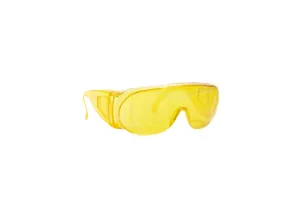
UV glasses and UV lamp: what to look for
Which UV lamp suits your workshop
A UV lamp for leak detection works on the UV light that UV dye reflects. The narrower the beam, the more precisely you shine along a pipe or connection. For a system you pressurise in the workshop, a hand lamp with a narrow beam is the handiest. If you have to get under a car or behind a wheel arch, a lamp with a longer neck works better. Check too whether the lamp runs on mains power or batteries. A battery lamp is handy when there is no socket nearby.
When you need UV glasses
UV light is harmful to your eyes. As soon as you shine a UV lamp along a system, put UV glasses on. The glasses block the UV radiation that bounces back off the leak and off bare metal. Ordinary clear safety glasses do not do that. When trying them on, watch two things: the glasses must fit over your own glasses and they must not slide down your nose when you lean forward. Glasses with an adjustable nose bridge and wide arms stay put during the job.
Combining leak detection with the rest of your aircon tools
UV leak detection only works if the UV dye travels properly through the system. Before you start, check that the system is under pressure and that the UV dye was added according to the machine's instructions.