As a mechanic, you know that detecting and fixing small leaks in an air conditioning system can be time-consuming and expensive. Leakstop offers an effective and efficient solution to this problem. In this blog, we share practical tips on using leakstop so you can get the most out of this handy product.
What is leakstop?
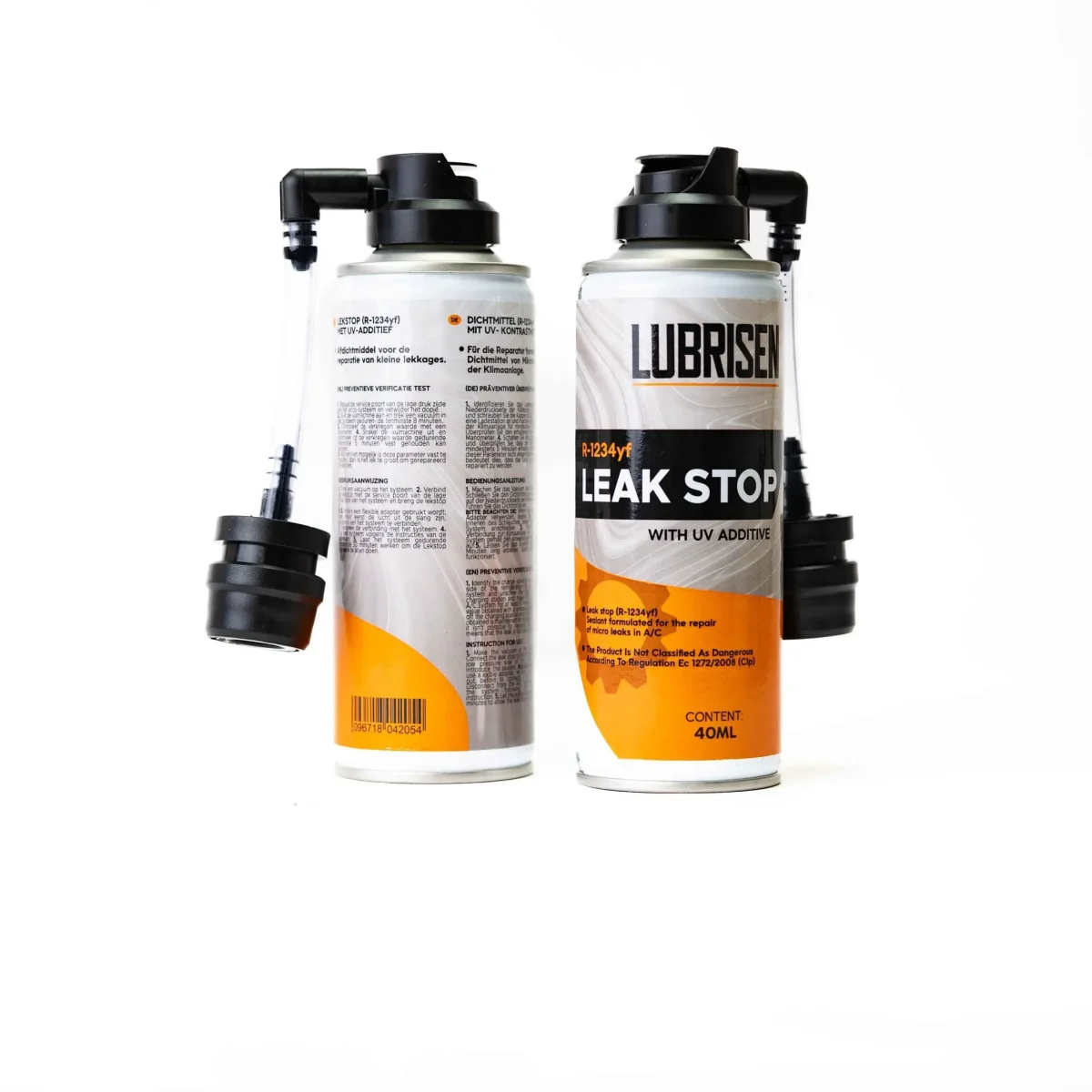
Leakstop is a special product designed to seal small leaks in air conditioning systems. It is injected into the system and works by sealing the leaks from the inside when it comes into contact with the outside air. This makes it an excellent option for fixing small leaks without having to disassemble the system.
When do you use leakstop?
Leakstop is ideal for sealing small leaks that are difficult to locate. Here are some situations where leakstop is particularly useful:
- Small leaks in pipes and connections: These are often difficult to find with traditional leak detection methods.
- Micro leaks in the evaporator or condenser: Small cracks or holes that are difficult to see visually.
- Preventive use: In some cases, preventively adding leakstop can help prevent future leaks.
How do you use leakstop effectively?
To achieve the best results with leakstop, it is important to use the product correctly. Here are the steps you need to follow:
- Check the system: Before adding leakstop, it is important to thoroughly inspect the system. Check that there are no large leaks that require a different repair. Leakstop is only effective for small leaks.
- Add leakstop via the low-pressure valve: Most leakstop products are injected into the system via the low-pressure valve. Follow the instructions on the package for the correct dosage.
- Let the system run: After injecting the leakstop, let the air conditioning system run so the product can circulate throughout the system and seal the leaks.
- Check the system after use: After using leakstop, it is recommended to check the system again after a few days to see if the leak has been successfully sealed.
Points to keep in mind when using leakstop
- Use the correct dosage: Too much leakstop can clog the system, especially in smaller systems. Always follow the recommended dosage on the package.
- Not suitable for large leaks: Leakstop is designed for small leaks. For larger leaks, a mechanical repair is necessary.
- Check compatibility: Make sure the leakstop you use is compatible with the type of refrigerant in the system (e.g. R134a or R1234yf).
Benefits of leakstop for mechanics
- Time saving: Using leakstop is much faster than disassembling the system to find and repair the leak.
- Cost saving: By using leakstop, you save on labor costs and the cost of replacing parts.
- Customer satisfaction: Customers appreciate a quick and affordable solution to their AC problems.
Tips for daily use in the workshop
- Preventive use: Consider adding leakstop as a preventive measure to every air conditioning service, especially in older vehicles where small leaks are more common.
- Combine with other repairs: If there are other problems with the air conditioning system in addition to the small leak, such as defective components, it is advisable to repair these first before using leakstop.
- Inform the customer: Clearly explain to the customer what leakstop is, how it works and what its benefits are. Emphasize that it is an effective solution for small leaks, but not a panacea for major problems.
Conclusion
Leakstop is a valuable tool for any mechanic working with air conditioning systems. By following these tips, you can effectively apply leakstop and provide your customers with a quick and affordable solution to minor leaks, increasing efficiency in the workshop and increasing customer satisfaction.